The Hiring Paradox: Faster Processes, Harder Decisions
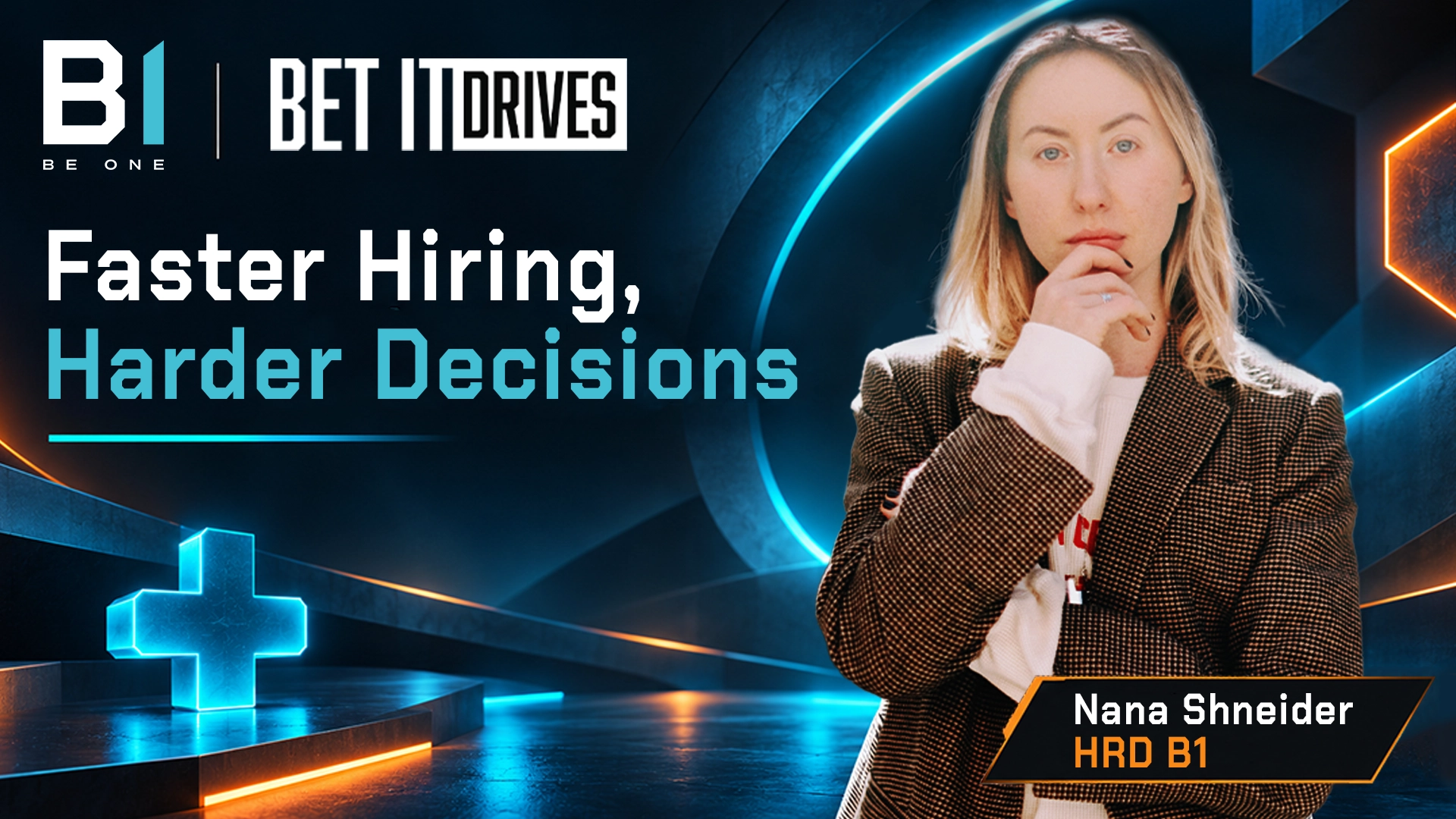
As artificial intelligence becomes part of everyday recruitment, HR leaders face a new challenge: deciding where technology adds value and where human judgment matters most. Nana Shneider, HR Director at B1 (Be One), shares her perspective on building a more efficient hiring process without losing the personal connection that makes it work.
The Problem with a Perfect CV
AI is changing recruitment from both sides of the interview table.
Candidates can use it to present their experience more clearly, while recruiters can use it to organise information, prepare questions, and summarise conversations. These tools can be helpful, but they also introduce a new challenge: polished information doesn't necessarily give us a better understanding of a person.
A candidate might have an impressive CV that doesn't accurately reflect their contribution to previous projects. An AI-generated interview summary might sound comprehensive while leaving out a detail that could influence the hiring decision.
If both sides rely too heavily on AI, we risk ending up with a polished CV and an equally polished interview summary, yet still knowing very little about the person we're considering hiring.
This is why I believe the recruiter's role remains essential. We need to ask follow-up questions, understand what candidates actually contributed, and form our own conclusions.
Faster Hiring Isn't Always Better Hiring
Speed has become an attractive measure of recruitment efficiency. But reducing the time it takes to hire someone doesn't automatically improve the outcome.
AI can certainly make preparation easier. For example, it can help transform hiring requirements into a structured skills matrix, giving recruiters and hiring managers a clearer set of criteria for evaluating candidates.
I support introducing this kind of automation gradually, with a clear understanding of what each tool is supposed to improve.
The danger comes when faster administrative processes create pressure to accelerate everything else, including interviews, discussions, and final decisions.
I'd rather use the time saved through automation to prepare better questions, listen more carefully, and reflect on what I've learned about a candidate.
Technology should give recruiters more room to think, not encourage them to stop thinking.
Why Potential Can Matter More Than Experience
One of the most important things I've learned in recruitment is that years of experience don't always tell you how much someone can contribute.
We recently hired someone for a design role. What caught my attention wasn't simply their professional background, but their curiosity, broad range of interests, and willingness to learn.
Since joining the company, they've actively shared ideas and suggestions. They've also made an effort to understand our culture and appreciate what the team had built over the previous eight years.
For me, that's a practical example of why potential deserves serious consideration.
When I interview someone with 15 years of experience, I'm interested in more than the number itself. I want to understand how their approach has changed, what they've learned, and whether they're still curious about new ways of working.
Experience matters, but so do flexibility, initiative, and the ability to grow.
AI may help us organise information about candidates, but recognising these qualities still requires a meaningful conversation.
A People-First Culture Is Built Through Small Actions
The conversation about AI in HR goes far beyond recruitment. It also raises questions about how companies communicate with employees and maintain genuine relationships.
HR can help establish a people-first culture, but managers bring it to life through their everyday interactions.
Consider something as simple as a thank-you message.
When I write one, I want to think about what that person actually did and why it mattered to me. AI might help improve the wording, but the appreciation itself should come from me.
The same applies to birthday greetings or messages to colleagues going through difficult situations.
These may seem like small gestures, but they show people that someone is paying attention.
If we routinely delegate the personal part of these interactions to AI, we risk losing opportunities to build trust and meaningful connections.
Being people-first isn't about avoiding technology. It's about knowing when someone needs efficiency and when they need genuine human attention.
HR Professionals Need Judgment, Not Just Better Tools
I don't currently use AI in my own recruitment process, although I'm open to introducing it where it solves a specific problem.
For example, automation could help employees find information about sick leave procedures or arrange a one-on-one meeting.
These are practical tasks where faster access to information can improve the employee experience.
But when someone approaches HR with a performance concern, a workplace conflict, or a personal difficulty, they need more than an automated response.
They need someone who will listen, ask thoughtful questions, and take responsibility for what happens next.
I apply a similar principle when using AI for writing. I'm comfortable letting it help shape a draft when the underlying idea is mine. But I still review the result, verify the details, and make sure the final message reflects what I actually want to say.
The responsibility remains with the person using the technology.
What Successful Hiring Will Look Like in Five Years
Looking ahead, I don't expect the fundamentals of successful recruitment to change dramatically.
A clear process with two or three stages can give both employers and candidates enough time to make informed decisions. When relevant, honest professional references from former managers, colleagues, or clients can provide valuable additional context.
Most importantly, hiring should remain a two-way decision.
I always remind candidates that we're choosing them, but they're also choosing us.
By the end of the process, both sides should understand the expectations, responsibilities, and opportunities involved.
My advice to HR leaders is simple: stay curious about AI, introduce it with a clear purpose, and evaluate it by the problems it actually solves.
The goal shouldn't be to use AI at every stage of recruitment.
The goal should be to make better decisions, create better experiences, and give people the attention they deserve.
About the Author
Nana Shneider is HR Director at B1 (Be One, formerly Betbazar), a product-driven technology company operating in the iGaming industry. She focuses on people-first leadership, talent development, recruitment, and building a company culture that supports continuous learning, adaptability, and long-term growth.